How to Tell a Compelling Story in 3 Easy Steps

Have you ever listened to someone tell a story — over coffee, at church, at a conference — and been absolutely bored to tears?

The meat of the story was interesting, but for some reason you just couldn’t stay engaged.

Or maybe you heard an anecdote that completely blew you away, but when you tried to retell it, it didn’t have nearly the same impact.

Why was that?

Chances are, whether you realized it or not, the storyteller was using dynamic storytelling elements.

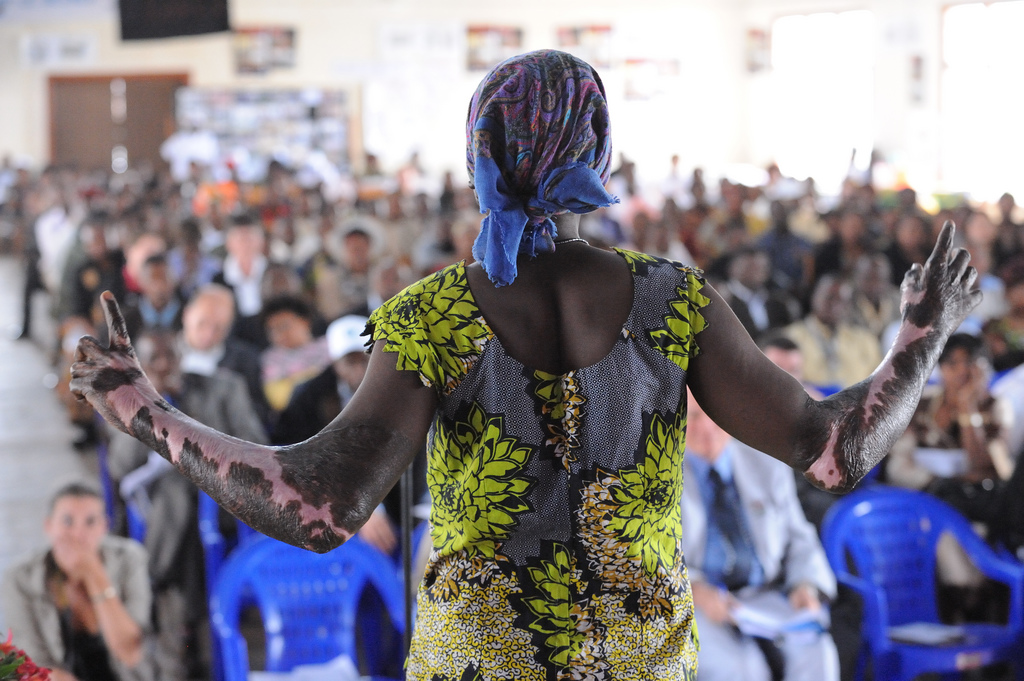
Woman telling a story

Photo credit: Julien Harneis (Creative Commons)

We are all living and telling stories. It is our duty to learn how tell them well.

Steps for Telling a Story

Here are three simple steps for how to tell a story and make it interesting:

1. Use a hook

A “hook” is your opener. It’s the attention-getter, the question or quote that immediately hooks your listener or reader. The more off-the-wall or mysterious, the better.

Dare your audience to get lost in the story.

2. Tell the story

A story has natural momentum to it. If you simply state what happened in chronological order (many people actually neglect doing this), you will captivate your audience.

Ira Glass calls this the “anecdote” — a story in its purest form — and likens it to a train on which you’ve invited others to join. Those riding along can feel that you’re headed towards a destination.

Glass also says that you need to use “bait” to keep your audience engaged. Bait, as he defines it, is a series of implicit or explicit questions that you raise. The implication is that any question you raise, you’re going to answer.

3. Reflect

So many people tell stories just to tell them. Or so they say...

But when you start asking people why they share the stories that they do, often there is an objective. It may be simply to encourage or cause you to ask questions, but there is purpose to the telling.

At the end of your story, take a moment to reflect on what you shared. Why is it relevant? Why did you spend time telling the person this? It doesn’t have to be cliche or cheesy; in fact, your reflection can even be subtle.

In your reflection (which you can also think of as a “closing”), you must resolve any questions or conflict raised in the story. This is also the perfect opportunity to revisit your hook.

Wrap up the story with a quick mention of your attention-getter or a restatement of your quote, interesting fact, etc. This is the opportunity to make sense of anything that seemed superfluous at the time.

Often, I hear people neglecting these three practices for telling better stories. They jump straight to the reflection or don’t take the time to grab their audience with a hook.

Or they drone on and one with an anecdote without explaining why they’re telling you the story. The result is confusion and even frustration.

Your stories deserve better.

How do you make your storytelling more compelling and dynamic?

Want to tell better stories? This book, Save the Cat, will help.

*Photo credit: Julien Harneis

**Disclosure: Some of the above links are affiliate links.

About the Author

Jeff Goins

I help people tell better stories and make a difference in the world. I live in Tennessee with my wife and dog. Follow me on Twitter and Facebook.

  • http://thisismethinking.com/ Darrell Vesterfelt

    Great post. One of my life goals is to become an incredible story teller.  One of my mentors told me about a maters degree program in story telling.  It sounds pretty great to me.  

    There is something about knowing what story to tell to what audience and in what circumstance that makes a story more powerful as well.

    • http://goinswriter.com/ Jeff Goins

      Thanks. Google “Ira Glass Storytelling” – that’s the equivalent of a Master’s in storytelling. Check out the video series he does. It’s gold.

      • http://twitter.com/mitchellroth Mitchell Roth

        I have listened to that video series, his instruction had me hooked! Here’s some advice on improving:

        Take a look around in your life, and recognize who are the great story tellers. And next time they practice their craft, instead of indulging in the story, try to analyze it, using the steps above as a template. When they’re done, maybe you could even ask them how they do it or where they think they learned it from.

        After studying them, then imitate. Study and imitate, over and over. That’s something that I took away from Ira’s series.

  • http://thewholedangthing.wordpress.com Ben Emerson

    I always feel bad for people who tell a testimony at church that get muddled and convoluted. The beautiful thing that happened to them gets completely lost amidst details that totally don’t need to be there. I love working with my students to try and help them tell better stories so that people will actually see the point and feel like the same thing can happen to them.

    • http://goinswriter.com/ Jeff Goins

      yeah, that’s the worst. sad, too, because they’re usually interesting stories.

      • http://thewholedangthing.wordpress.com Ben Emerson

        Totally! I have a theory that most people (if not everyone) are sitting on a
        gold mine of great, powerful, inspiring stories. They just don’t know it.
        And since they don’t know it, they don’t tell the stories or learn how to
        tell the stories.

        • http://goinswriter.com/ Jeff Goins

          agreed

  • http://about.me/jonfulk Jon Fulk

    I was really hoping to find an mp3 of you telling a story at the end of this post :)  I have to admit that I get lost in the details of my stories at times.  In almost everything, it seems to make sense to constantly keep the objective in focus.  Great post!

    • http://goinswriter.com/ Jeff Goins

      Great idea!

  • Anonymous

    I try adding humor to any story. Sometimes it helps to break and lighten the mood, then get back into the story. 

    • http://goinswriter.com/ Jeff Goins

      that’s a great element! i’m adding that to a list of tips for storytelling in the future. this is the basic how-to, but there are add-ons you can use to improve your craft.

  • http://davidsantistevan.com David Santistevan

    Sometimes I feel I’m not the best storyteller because my stories are rather simple and ordinary. But when I step out and say it, I’m surprised by the reaction. Being “who you are” , using the points you mentioned is enough. It also doesn’t hurt to read Don Miller’s “A Million Miles in A Thousand Years.”

    • http://goinswriter.com/ Jeff Goins

      Agreed

  • Mrsawiggins05

    I’ve found that various voices and gestures and facial expressions keep an audience of all ages highly entertained.

    • http://goinswriter.com/ Jeff Goins

      Agreed!

  • http://somewiseguy.com ThatGuyKC

    This is great! Sometimes I feel like I struggle with telling a story and then it gets a great reception. Other times I feel like I knocked it out of the park and then it ends up falling flat.

    Going to try and remember these storytelling tips going forward.

    • http://goinswriter.com/ Jeff Goins

      Thanks, KC! Hope it helps.

  • stephanie pridgen

    Good tips and important to remember. Stories have so much power when told effectively They help bring us together -your story connects to my story – it’s like a tapestry being created, and it moves me to share in your joys, struggles, fears, etc because we are connected.

    • http://about.me/jeffgoins Jeff Goins

      Thanks, Pridge. I agree.

    • http://goinswriter.com/ Jeff Goins

      Thanks, Pridge. You’re absolutely right. I love how you tell stories, btw.

  • Jmunchbach

    Hi Jeff,

    It’s Friday morning in Houston, Texas. I’m about to break away for a couple days of camping/hunting with a couple youngsters in my community. I gave up hunting years ago, never enjoyed killing a deer. These boys are very excited and I’m glad to get away with them and listen to the birds and whatnot. Hope they get a deer and I hope they don’t.

    I’m writing to tell you thank you, my friend.

    Your work is a healing ministry to me. I suspect you know that your writing and your “marketing” is really ministry.

    One day we will meet. Here or there. This life or that life.

    We share so much in common being humans broken.

    I am thankful for you and your work.

    Until we meet.

    Love in Christ
    Jim

  • Justinmurray17

    Loved your article. Succinct and helpful!

    • http://goinswriter.com/ Jeff Goins

      Thanks, Justin!